Byungkyu Lee
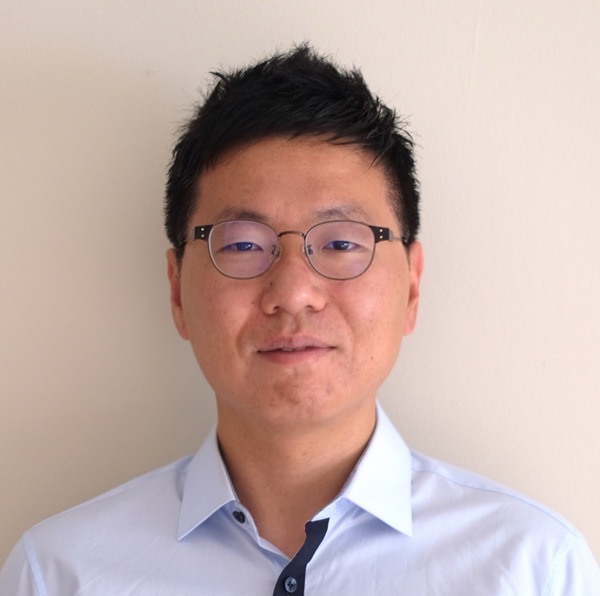
Byungkyu Lee
Associate Professor of Sociology, New York University
Co-Director, Networks in Context Lab
Department of Sociology, New York University
79 Washington Square East, New York, NY 10013
bklee@nyu.edu
NYU Sociology Google Scholar Dataverse GitHub CV
[now] [news] [tools]
I study social cohesion and network dynamics, exploring their impacts on individual, community, and societal well-beings in the domains of health and politics. I am also interested in using large language models, surveys, and social media data to develop indicators of social cohesion and polarization, predict public opinion, and simulate AI agents for advancing social science research. My research has been funded by the National Science Foundation, National Institutes of Health, Russell Sage Foundation, and others. Here’s my CV.
AI coding agents for academic research
I believe that coding agents, when used responsibly, help us do the creative and high-quality work that was impossible before. I am happy to share my experience and give talks or workshops on using coding agents effectively and reliably in academic research.
Here’s my own setup, which I’m confident can support the use of coding agents across a wide range of academic research tasks.
- claude-academic-setup: a small, safe starting point for academic researchers who want to use a coding agent (Claude Code or Codex).
What I’m working on now
Health and aging
Papers
Funded by NIH · AFSP · #StartSmall
How do social relationships and broader social contexts shape health, aging, and mortality? My current work focuses on two areas:
Social relationships and biological aging. My recent study shows that negative social ties–particularly relationships with “hasslers”–are associated with faster aging, extending their consequences beyond subjective well-being to biological aging processes. Building on this work, I am conducting epigenome-wide association studies (EWAS) of negative social ties and developing multimodal aging clocks that integrate facial, vocal, and DNA methylation data to better predict health outcomes.
Social determinants of suicide deaths. In my previous works on social determinants of suicide, particularly around unemployment, I developed an approach that integrates data on suicide decedents from the National Violent Death Reporting System (NVDRS) with data on living counterparts from the American Community Survey (ACS) to study social determinants of suicide mortality. I am extending this line of work by developing machine learning models that use narrative and structured NVDRS data to identify lesbian, gay, and bisexual (LGB) decedents, enabling more rigorous research on suicide disparities among sexual minorities.
Social cohesion
Papers
Funded by CHIP50 · The American Assembly · NYU · NYU Abu Dhabi
What brings people together and fosters cohesive communities? How do social cohesion and connections shape individual and community well-being? My research addresses these questions using egocentric network data and community-based social media data. My current work focuses on two areas:
AI companionship and social well-being. Currently, I am collecting new data using issue-generator and name-generator approaches to examine whether and how AI companions replace, complement, or become integrated into existing social networks, and what these changes mean for individual well-being and social connectedness.
Social cohesion and hyperlocal community responses to adverse events. My current research use data from neighborhood-based social media platforms to develop new measures of community responses, collective efficacy, social cohesion, and network dynamics. I also use Meetup data to examine how people organize social gatherings and build community connections across cities.
AI and methods
Papers
Funded by NSF · TESS
Large language models (LLMs) that produce human-like responses have begun to revolutionize research practices in the social sciences. How can LLMs and surveys enhance each other, and how can researchers use and trust AI agents in their own work? My current work focuses on two areas:
LLMs in surveys. In my recent work, AI-Augmented Surveys, we develop an LLM-based framework for predicting missing responses in repeated cross-sectional surveys by incorporating embeddings for questions, respondents, and survey periods, and we show that LLMs and surveys can mutually enhance each other. In another project, based on our experience developing a 22-item battery measuring AI reliance, we examine the potential and limitations of LLMs for revising survey items and simulating responses during scale development.
A plan-based workflow for research with AI agents. We are currently developing a Claude Code plugin that enables researchers to plan the data analysis step by step in rigorous and creative manners.
Social media
Papers
Funded by NSF · Meta
Can social media platforms foster diverse interactions and meaningful political deliberation? What shapes the quality of online conversations, and whose voices are amplified or suppressed? My current work focuses on two areas:
Deliberation and ideological signaling on Facebook. With the Networks in Context Lab, I continue to work with a large-scale multilevel dataset that covers hundreds of millions of conversations that unfolded during the 2016 US presidential election campaign across 1,058 major political forums on Facebook. Our main project is to study how people define productive conversations and what fosters them in public forums on social media. In a related study, we examine how individuals express their political leanings on social media and how these “ideological signalings” are perceived by others.
Whose judgments count in content moderation. In a new study, We examine how algorithms aggregating diverse human judgments into a single score shape content moderation decisions and, in turn, demographic inequalities in users’ experiences of online toxicity. Combining large-scale judgment data with counterfactual simulations, we investigate how the demographic composition of moderator pools determines whose perceptions of toxicity are reflected in moderation decisions and which users receive greater protection online.
AI and society
Papers
Funded by NRF Korea · NYU · NYU Abu Dhabi
Are generative AI systems functioning primarily as tools that enhance productivity and augment human capability, or are they replacing human judgment and expertise by becoming an authority? The question we need to ask is not whether people should (not) use AI, but how they can rely on it productively without becoming dependent. My current work focuses on two areas:
Measuring AI reliance. We have developed a 22-item battery measuring a multifaceted nature of AI reliance across four dimensions. We are currently collecting a longitudinal survey that captures domain-specific patterns of AI reliance across work, education, and personal life.
How people spot AI hallucinations. I study who catches an AI error and how. In an experiment, raters judge AI answers across three domains chosen to span how much people already know: everyday topics like cooking and money, general facts, and health. This study prepares a long-term experimental design to systematically investigate how varying levels and patterns of LLM-generated medical misinformation impact user reliance.
Work, race, and institutions
Papers
Funded by RSF
How do colleges, universities, and employers communicate their commitment to diversity after the 2023 Supreme Court decision in Students for Fair Admissions v. Harvard and UNC (SFFA)? How do academic prestige hierarchies adapt under conditions of market contraction? My current work focuses on two areas:
Diversity after the 2023 Supreme Court decision. Funded by the Russell Sage Foundation, this project examines how colleges and universities communicate their commitment to diversity to prospective students and faculty in the wake of the 2023 SFFA decisions, with a focus on whether and how schools’ messaging has changed over time. We examine the text used in college viewbooks, including print and digital brochures published by colleges themselves, as well as college guidebooks published by Princeton Review. Using job posting data, we also analyze how diversity signaling in hiring has evolved across occupations and industries in response to these legal and political developments.
Careers of sociology PhDs. This study examines the dynamics of stratification within the sociology job market from 1980 to 2023, with a particular focus on the post-Great Recession era. Using longitudinal data from the American Sociological Association’s Guide to Graduate Departments of Sociology and US News and World Report rankings, we analyze patterns of graduate outcomes, faculty transitions, and the impact of institutional prestige on PhD exchange networks.
News
June 2026. Hey! I’ve been promoted to Associate Professor with tenure at NYU!! I am so grateful to my colleagues, students, and collaborators for their support and encouragement. I am excited to continue my research and teaching at NYU!
Feb 2026. My paper on negative ties and aging just got published at PNAS!! Using epigenetic clocks and egocentric network data, we find each additional “hassler” in your close social network is associated with ~9 months of extra biological age and 1.5% faster pace of aging.
Jan 2026. I will serve on the Sociological Methodology Editorial Board for the next two years.
May 2025. I’m super excited to work as PI on the two-year project, “The Effects of the 2023 Supreme Court Ruling to Ban Race-Conscious Admissions on College Presentation Strategies” with Maria Abascal and Tiffany Huang, funded by the Russell Sage Foundation!
May 2025. My paper on the unemployment and suicide received an Honorable Mention for the Best Publication Award from the Section on the Sociology of Mental Health, American Sociological Association!
November 2024. My paper on the unemployment and suicide is now published at American Sociological Review. You can download the paper here.
October 2024. I will work as Consulting Editor for the American Journal of Sociology for the next two years.
September 2024. I was very excited to work as co-PI on the five-year project “Social Cohesion in Action: How Collectivist and Interdependent Communities React to Adverse Events” (PI: Baldassarri), funded by the DOD Minerva Program. But, it is now being canceled.
August 2024. I had the honor of revising the 5th edition of a Korean textbook on social network analysis—the very book that sparked my own interest in the field. You can order the book here.
August 2024. I’m excited to work as co-Investigator on the three-year project, “Exploring the Co-evolutionary Dynamics of Artificial Intelligence and Society: A Computational Social Science Approach” (PI: Jeon June), funded by the National Research Foundation of Korea.
December 2023. My paper on the patterns of social networks during COVID-19 is published at Science Advances! Check this out!
· Last updated November 2026